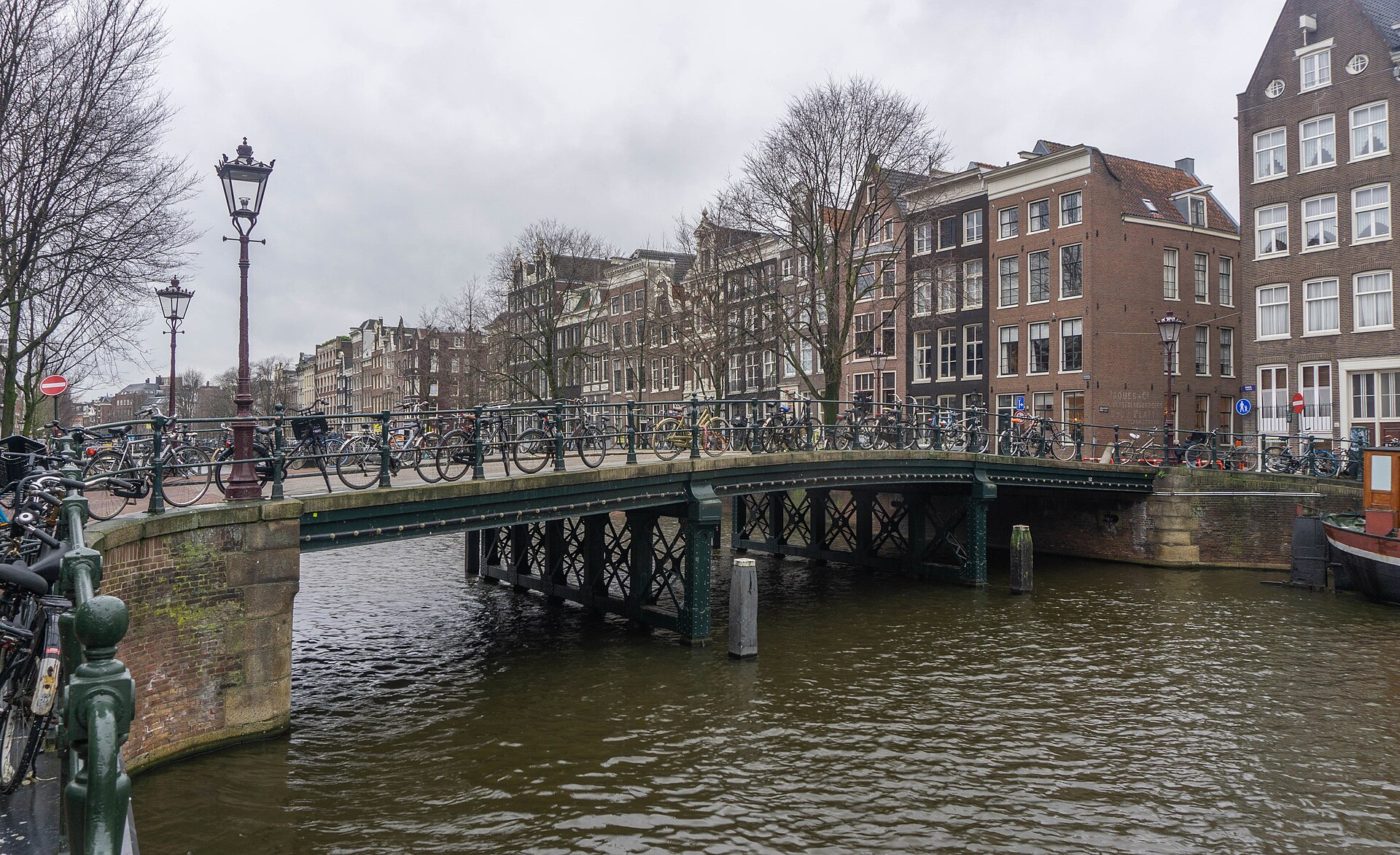
By bike, like a local
The best way to get around: the city is flat and there are bike lanes everywhere. If you're going to move around a lot, renting a bike works out cheaper than public transport.
Flat cityBike lanes everywhere
Visitor logistics
How to get around, how to pay, and the rest of the logistics, straight from someone who lives here.
Getting around
The best way to get around: the city is flat and there are bike lanes everywhere. If you're going to move around a lot, renting a bike works out cheaper than public transport.
You can pay for all of it by tapping your bank card on the way in — more convenient, and truer to the actual fare, than buying a ticket (not every station has a machine, either).
Sixt, Hertz and the like. A Brazilian driving licence is valid for 6 months in the Netherlands if you're on a tourist visa. The car-sharing services (MyWheels, Fetch, etc.) are residents only.
It exists and it works, but brace your wallet: it tends to be a lot pricier than in Brazil.
If you're getting on a bike
The whole city cycles, and nobody cuts you slack for being a tourist. Four things that save you a fright and a fine.
Holding your phone while cycling is banned (article 61a of the RVV) and the fine is €170. You don't even have to be using it: having it in your hand is enough. Need to check the map? Pull over first.
The bike lane is a road, not a pavement: stopping in the middle of it is like stopping in the fast lane. If you need your phone or the map, get off the lane and pull up onto the pavement.
Before you turn at a junction, stick your arm out towards the way you're going, left or right. It's how the people behind you know what you're about to do, and everyone here does it.
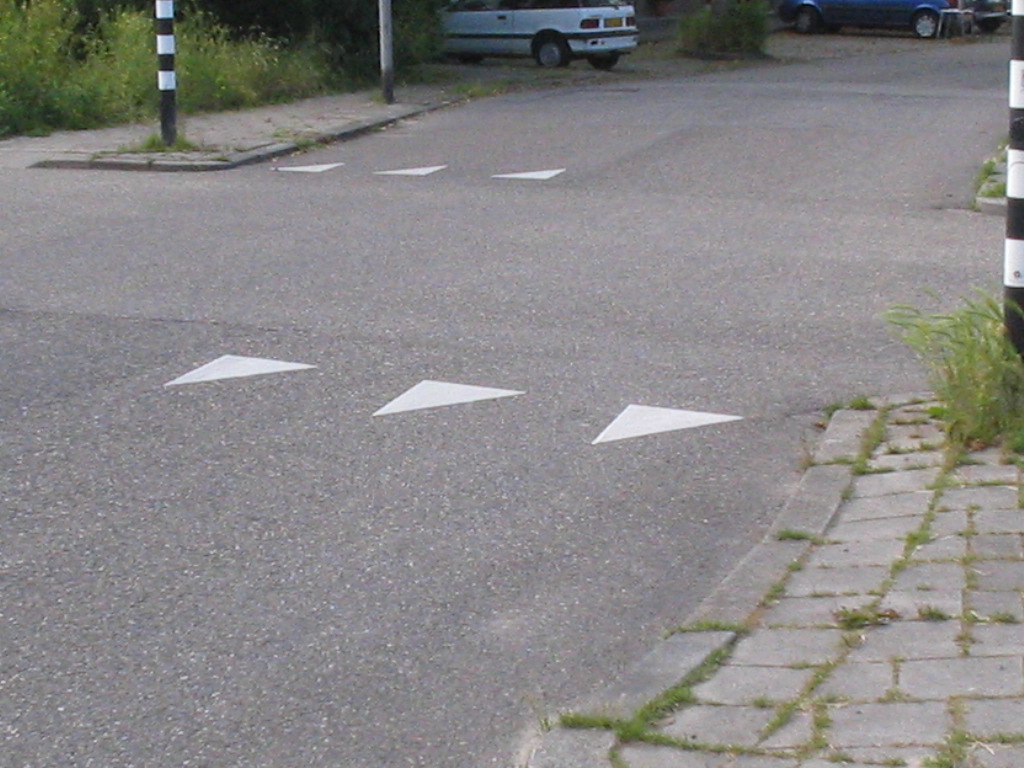
These are haaientanden, “shark's teeth”. Wherever they appear, you give way to whoever is coming along the crossing road. There's only one rule: the points face whoever has to wait. If they're turned towards you, it's not your turn.
The points always face whoever has to wait.
Giving way doesn't have to mean stopping dead: if the road is clear, carry on. The teeth say who waits, not where to stop.
Details that make a difference
Most places only take cards; cash is a rarity. And watch out: Mastercard isn't always accepted.
If the plan is to eat later, check in advance how late that particular kitchen runs.
Plastic bottles and some beer cans and bottles are returnable: the machine sits in an aisle inside the supermarket and gives back ~10 cents a bottle as a voucher.
Dinner out between Friday and Sunday? Book ahead. The good ones fill up early.